Most visitors know Bario for its famous ‘Bario rice’ a name that evokes a sense of aroma, quality and premium value. So, it’s no surprise that many people associate Bario mainly with its rice.
But hidden among the highland valleys is another local treasure, Bario salt. A traditional product with deep cultural roots and a long history in the Kelabit community.
A Salt Unlike Any Other
Unlike coastal salt, Bario salt comes from natural underground salt springs found in the highlands around Pa’ Umor.
Local families have harvested this mineral-rich water for generations, using traditional methods to process it into a unique, artisanal salt that is used for cooking, food preservation and even trade.
Why Salt Matters in Kelabit Life
Salt plays an important role in everyday Kelabit life because it can enhance the flavour in local dishes. Salt also used to preserve meats, such as wild boar and deer, helping families make food last longer without refrigeration.
Furthermore, having salt in the house traditionally meant being prepared for the months between harvests.
The Traditional Bario Salt-Making Process
The traditional method of producing Bario salt is labour-intensive and fascinating:
1. Collect brine from the salt spring — Local saltwater wells flow with naturally salty underground water.
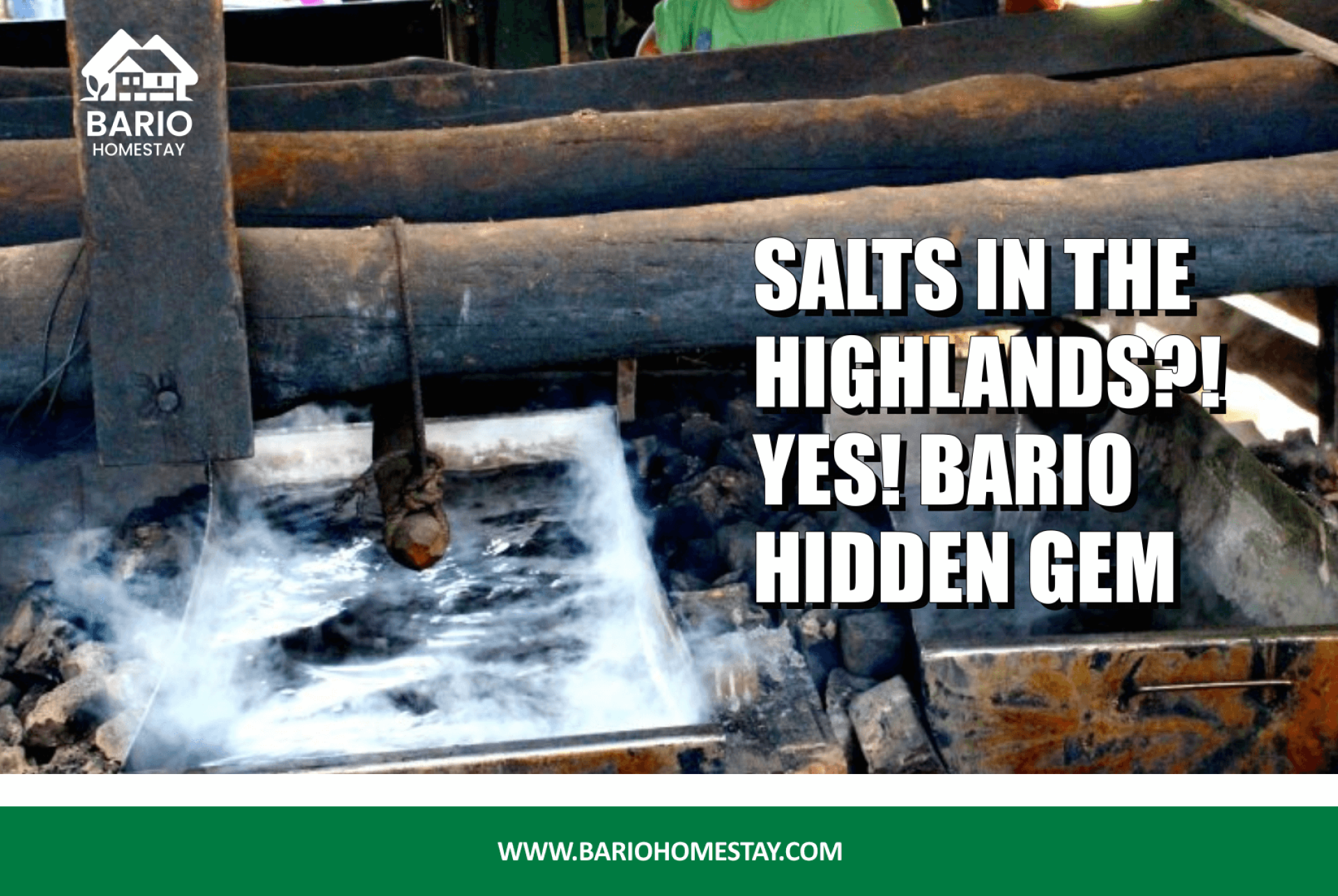
2. Boil the brine continuously — Large metal drums are set over open fires powered by abundant firewood. The brine must be kept boiling for long periods, often 24 hours or more.
3. Allow salt crystals to form — As the water evaporates, salt crystals begin to form at the bottom of the pot.
4. Dry and harden the salt — The damp salt is transferred into bamboo tubes and dried further, sometimes tucked into the fire again so it hardens into a solid form.
This entire process can take about a week and requires constant attention to keep the fire and brine at the right temperatures.
From Local Use to Highland Specialty
In the past, almost every Kelabit family produced their own salt during the quieter seasons between rice planting and harvest, often setting up camps near the salt springs for days to replenish their stocks.
Today, with more people working or studying off-site, commercial production has taken over. But salt production remains an important cultural heritage skill, and the finished product is sold both locally and outside Bario, much like the renowned Bario rice.
Visiting the Salt Site
Visitors to Bario can still experience this tradition firsthand:
• The salt-making site is about a two-hour walk east of the Bario market, or roughly 20 minutes by 4WD or motorbike, depending on the route.
• It’s an ideal stop for travellers curious about traditional highland life and living heritage.
A Local Highland Treasure
Bario salt may be produced in small quantities, but it carries deep cultural and culinary importance. Crafted through firewood, human effort and community tradition, it stands as one of the true treasures of the Kelabit Highlands, alongside the prized Bario rice.
So, pack your bags, catch a flight and come experience Bario for yourself.